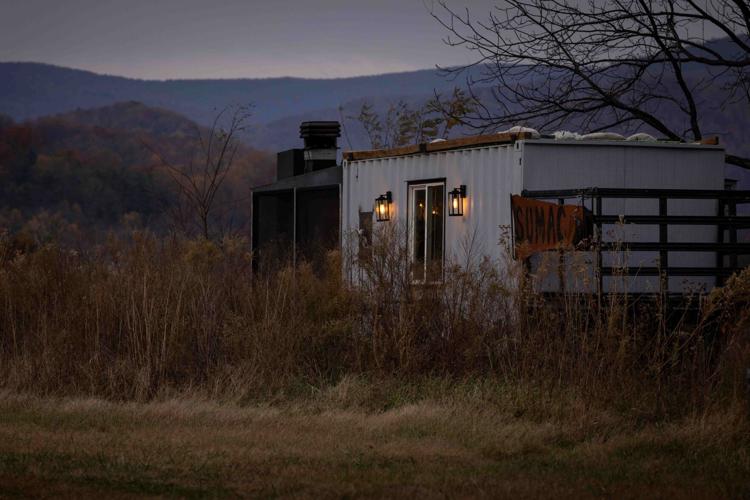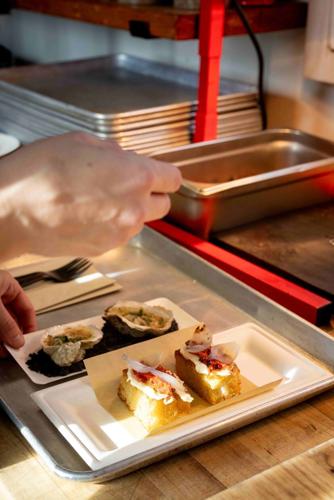



All of the cooking at Sumac is done inside a corrugated shipping container Gleason got from his neighbor and welded onto a 36-foot decommissioned cattle trailer.
Some living things fare better in the wild. Even chefs.
While Daniel Gleason may have trained at Michelin-starred establishments like The Inn at Little Washington, he’s a born naturalist at heart.
Growing up, he spent many a summer at natural history camp. His favorite pastime was hiking and foraging for florae in the woods behind the family home in Rockville, Maryland with his dog. In his 20s, this free spirit lived out on the road as an indie rock singer and keyboardist, while moonlighting in kitchens around Maryland and D.C.
That said, one doesn’t tend to associate the great outdoors with fine dining.
People are also reading…

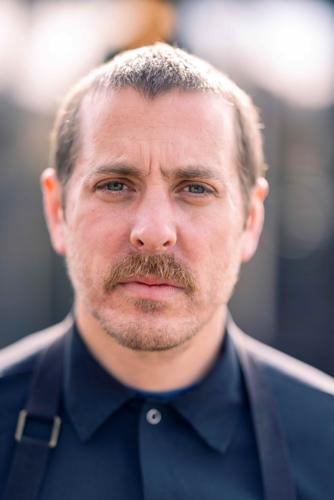
Daniel Gleason is a Michelin-trained chef reimagining fine dining through nature, fire, and local foodways.
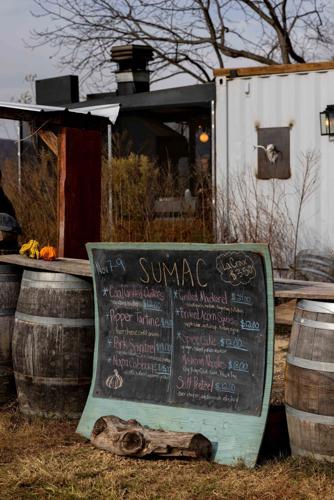
Sumac, the restaurant that this Inn alum and his wife Abigail opened at Pen Druid Brewing in Sperryville, isn’t, strictly speaking, a “restaurant.” Sure, they offer the sort of multi-course tasting menu one might expect from a place with four walls and white tablecloths. Only theirs is written on an old chalkboard and served on paper plates with disposable cutlery. And the closest thing they have to walls are the Blue Ridge Mountains in the background.

Sumac's multi-course tasting menu is written on an old chalkboard outside.
There is no dining room either. Just a bunch of weathered picnic tables, spread across an open field, teeming with prairie grass and lit by the late afternoon sun.
After checking in at the host stand — a piece of plywood rested over two beer barrels, to be precise — guests are told to forage for their own seats. Our party sets up camp in a secluded cluster of trees behind a log pile, a safe distance away from kids kicking soccer balls. Chilled oysters and a cheese plate with pickles somehow find their way to us on a metal sheet pan.

Because Sumac's ingredients are sourced locally, the restaurant operates with the growing season.
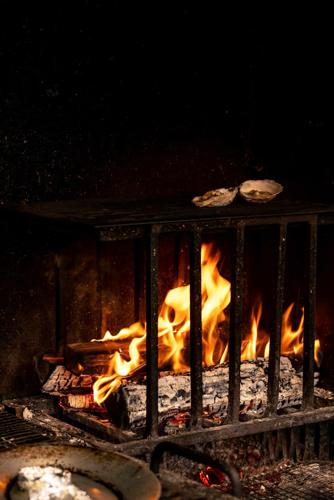
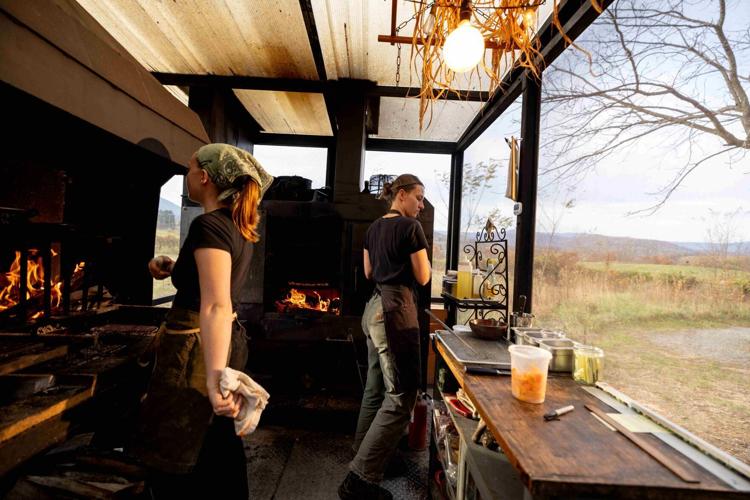
All of the cooking at Sumac is done inside a corrugated shipping container Gleason got from his neighbor and welded onto a 36-foot decommissioned cattle trailer. It comes equipped with two wood-burning hearths and a screened porch that provides a peek into the kitchen as they rotate food on and off the fire. “A restaurant without walls,” Gleason understatedly calls what The New York Times heralded as one of the 50 best restaurants in the country.

Meals are prepared on wood-burning hearths.
Pen Druid’s owners, known for their wood-fired brewhouse and methods involving spontaneous fermentation and native yeasts, recruited him back in October 2020 for their newly-relocated brewery off of Route 522. Culinarily, he shared the same core influences they did.
Given his resume, Gleason, then a sous chef at Early Mountain Vineyards, wasn’t crazy at first about running an outdoor food truck. At the same time, it was the peak of the pandemic. Not exactly an opportune moment for a brick and mortar. A decade of working in fine dining restaurants had taken a toll on him as well. “Subconsciously, I was not happy there,” he says, confessing he’d been somewhat disillusioned by that environment and all the frustrations, constraints, and pressures that came with it.
So, he decided to give the idea of getting back into nature a shot, which fortuitously imparted a sense of relief and perspective. “The clarity that Sumac has given me has been pretty awesome.”
(For their second Sperryville restaurant, The Black Twig, opened in 2023, the Gleasons have similarly avoided the trappings of fine dining, opting for a casual, family-style American eatery and bar instead.)
Gleason’s initial setup at the brewery was caveman-like: a makeshift tent and fires built out of holes dug into the ground, over which he’d grill up plates of Autumn Olive Farms sausages for the hungry masses. But the concept evolved as he became increasingly confident in what he was aiming to do.
By year two, the Sumac menu had matured from a fledgling a la carte offering into a full-fledged chef’s tasting. The following year, demand for it grew so much, they began to accept ticketed bookings, drawing destination diners from D.C. and other cities.

Sumac’s stated mission is that 100% of the proteins, produce, grains, and dairy — everything except the seafood — originate within 150 miles of the restaurant.
The heart of the operation is their commitment to sourcing locally. Sumac’s stated mission is that 100% of the proteins, produce, grains, and dairy — everything except the seafood — originate within 150 miles of the restaurant, something not so easily achieved overnight.
“None of these farms knew us,” Gleason recounts. It wasn’t as if he and his wife could just call up a random farmer out of the blue or place an order with the click of a button. And in contrast with a commercial distributor, the folks taking the orders also happened to be the ones picking the crops.

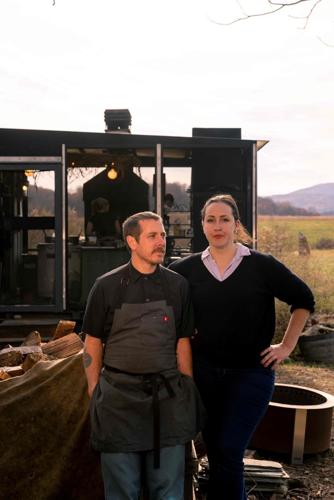
Daniel and Abigail Gleason opened Sumac in 2020.
In the beginning, the couple had to cultivate these relationships on their own, logging countless miles in their cars, driving east to cattle ranches in Fauquier County and back to neighboring fruit stands for weekly farm pickups. Abigail, whose background in agricultural nonprofits, was also able to connect them to several of the farms she’d been working with at 4P Foods, an organization that supports small, regional growers.
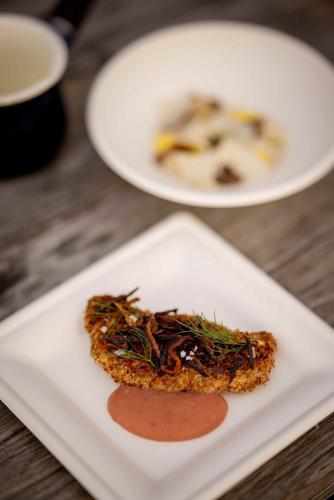
Presently, the restaurant partners with 10 or so producers — from a farmer-owned co-op of creameries based in Dayton, Virginia that supplies an Alpine cheese which delightfully melts like raclette, fortified by a glug or two of the brewery’s signature ale, to a purveyor of prized mushrooms in Madison County, clusters of which are cooked over hot coals and served on toast with beer cheese.
Less than 10 minutes away is an orchard that grows Magness pears, majestic at their ripest, particularly when placed atop a pedestal of custardy, pain perdu-style sponge cake. A crowning dollop of bay leaf-infused crème anglaise adds to their aura.

With dishes rooted in homesteading practices such as pickling and preserving, the latest group of chefs traditionally kicks things off by readying the larder for the next bunch, bringing a true sense of continuity to their work.
Much like summer camp, Gleason hires a new crew every year. With dishes rooted in homesteading practices such as pickling and preserving, the latest group of chefs traditionally kicks things off by readying the larder for the next bunch, bringing a true sense of continuity to their work. Rarely do they get to savor the fruits of their own labor, but they do get to taste the efforts of those who came before them.
Black walnuts, previously harvested from trees in back of the kitchen trailer, are turned into vinegar while scallops are salt-cured and smoked, both of which are folded into an XO sauce — an umami-laden Cantonese condiment, rich with garlic and chilies — used to deepen the charred flavors of eggplant.
Unripened red plums are fermented for six months to a year with wild-growing shiso found on site, resulting in a pickled, Japanese-style umeboshi that pairs with a little pepper relish to enliven a seared skirt steak.
Gleason keeps a detailed record of every weekly menu in a bright red notebook. With Sumac now entering its sixth full season, he’s managed to fill four of them so far, cover to cover. Most of his dishes, finished over the wood fire, lean in a bold, acid-driven direction, though there are, on occasion, more delicate concepts as well.

Sumac partners with 10 or so producers to source ingredients for seasonal menus.
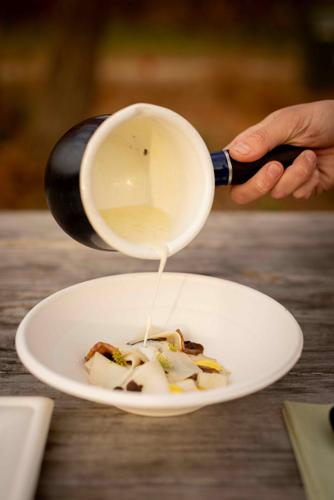
In the second week of October, when my friends and I were there, it was an ethereal bite of soft, ricotta-filled agnolotti, brightened by preserved apricots and a beurre blanc made with their tart juices, that left the biggest impression, bridging summer to fall in a beautiful yet subtle way.
Time at Sumac is fittingly measured in seasons, each one ending in the middle of December. Come March, as this article goes to print, the restaurant will emerge from hibernation and into the first of the wild ramps, garlic scapes, and arugula for the year. Gleason will be ready.
“As a chef, sometimes what takes the longest time is to find your voice,” he says, “and I do feel as if I’ve found my voice.”
All he had to do was go outside and look for it.
Sumac
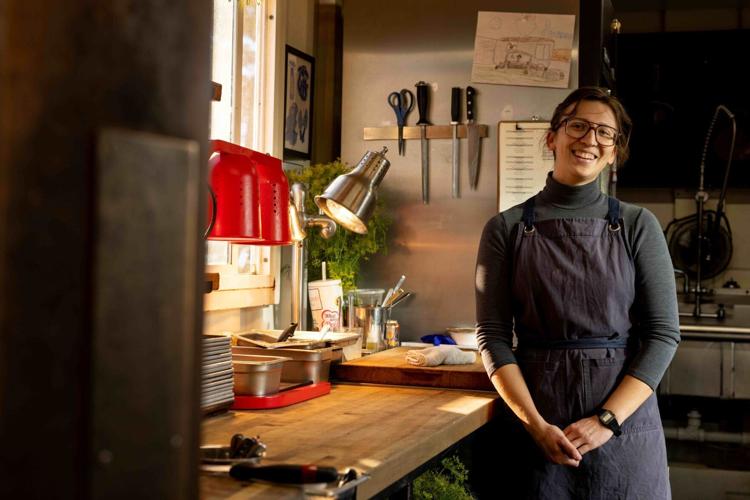
Much like summer camp, Gleason hires a new crew of chefs every year.