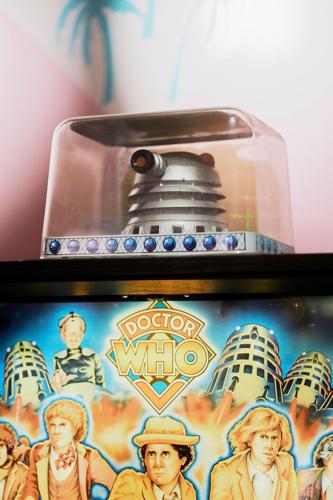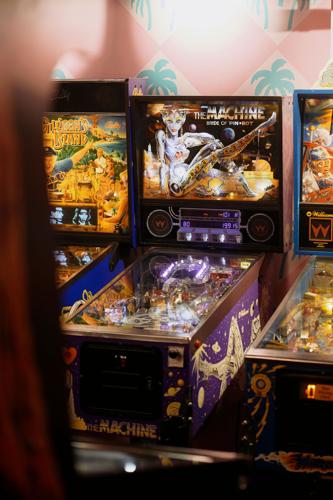



Before Mario and Luigi, before Pac-Man, before Pong, there was pinball.
Over the decades, pinball playing fields have expanded from two dimensions to multilevel mazes. Scoring has grown from four digits to 10. But the basics remain the same: a spring-loaded plunger sends a steel ball caroming randomly around bumpers, and flippers keep it moving as long as possible.
“It’s physics in a box,” says Nic Schell, executive director of the Roanoke Pinball Museum.
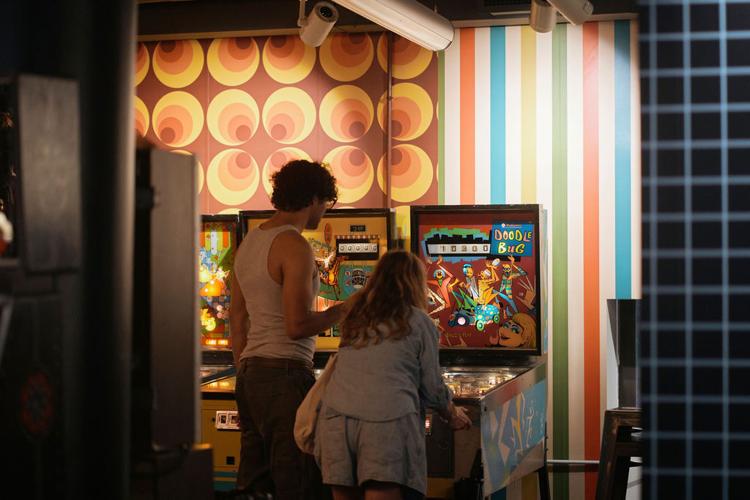
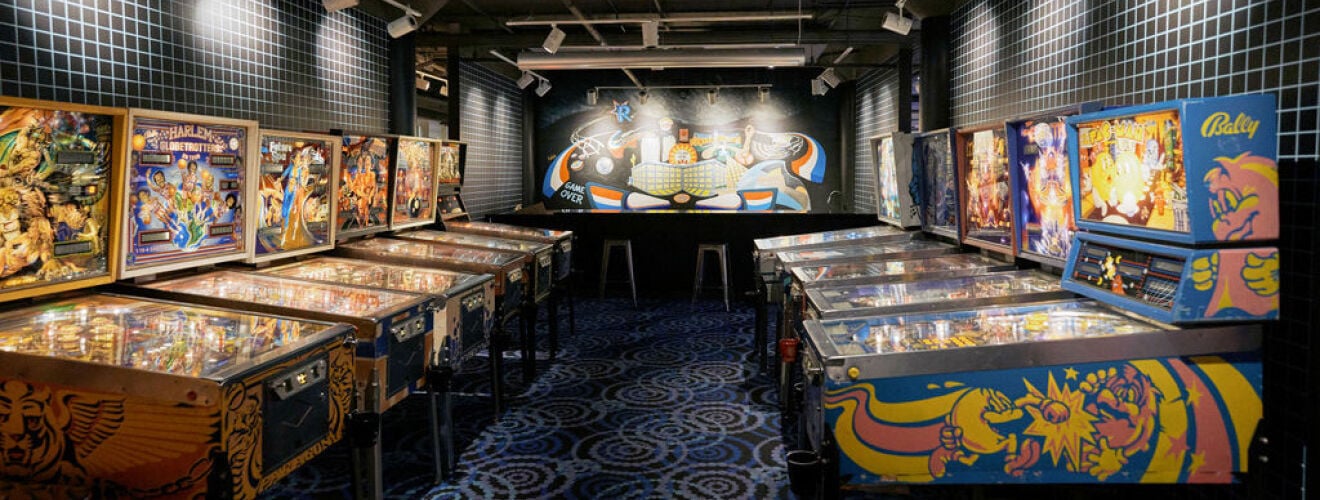
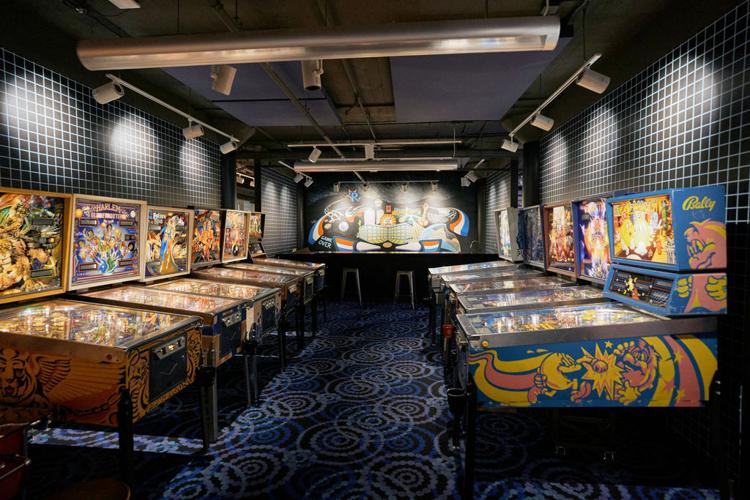
Located on the second floor of the Center in the Square entertainment complex, the nonprofit museum gives visitors a way to experience generations of pinball in a single room. For the cost of a $16 day pass, visitors can play all the games they want for as long as they want. Wallpaper provides a visual key to each decade, with Beach Boys-style stripes signifying the 1960s and a Tron-style grid symbolizing the 1980s.
People are also reading…

Schell, 55, became fascinated with pinball when his father bought three of the games in 1977 to entertain party guests at the family’s home in Dallas. He was intrigued by the mix of electronics and mechanics that made the games work. “Anything that’s physics, I always had an interest in,” Schell says. “And this is kind of its ultimate form.”
Many years later, he took ownership of those old games and founded a pinball workshop at the Dallas Makerspace, where the members repaired old games and taught other people to do the same.
“There’s an aliveness,” Schell says. “The clicking of the machinery. You can hear the gears, the bells, and the chimes. It just creates this mechanical, living connection with physics that makes it like playing baseball or something.”

After years of writing code for e-commerce websites, Schell decided to embrace his love of pinball full time. He started traveling the country repairing machines for the price of a night in a hotel. He put 30,000 miles on his car and was featured on CBS News. In 2017, he found his way to Roanoke, where he has been ever since.
Schell recently expanded the museum to include the Starcade, a collection of 1980s-era video games that would make any Gen Xer nostalgic for their local mall. Dig Dug, Donkey Kong, Centipede, Tron — even the legendary Dragon’s Lair — they’re all within reach.
On a recent weekday, Schell was giving a tour of the museum and describing some of the aspects that make the pinball collection unique. There’s the Atari pinball machine from 1978 that aimed to fuse physical pinball with the video game technology threatening to replace it. There’s Critical Mass, a one-of-a-kind prototype game inspired by the Three Mile Island nuclear disaster. Then there’s the 1984 space shuttle game that added an upper level and 3-D graphics. It was the first of several pinball revivals over the past 40 years that saw game developers add wizard levels and secret modes to make play more exciting. “As technology evolves, pinball has to keep up with it,” Schell says.

While Schell speaks, the familiar thump of flippers and ring-ping of balls hitting bumpers breaks the quiet. It’s 11 a.m., and the Roanoke Pinball Museum is open for business.
In the age of Xbox and Nintendo, what keeps people coming back to pinball?
“There’s so much variety in the play,” says Leslie Furrow, who has stopped by with her husband, Philip, to use their family pass. It’s their day off, also the kids’ first day back at school, and Philip is playing a Simpson-themed game.
For the Furrows, both 42, the pinball museum brings back memories of the Roanoke Skate Center.
“I didn’t do much skating,” says Philip. “But I played a lot of pinball.”