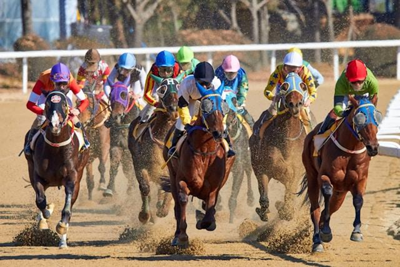


Photo provided by Unsplash
A few days before the Preakness Stakes, the conversation always seems to drift toward the odds board. The race itself is still ahead, but expectations are already forming, and the numbers are beginning to reflect that. In 2026, those shifts feel sharper, more immediate, and understanding how those odds take shape isn’t just background detail.
What Preakness Stakes Betting Odds Actually Mean
At their core, betting odds are just a way of expressing probability, but they rarely feel that simple.
American odds dominate in the U.S., with positive numbers indicating potential returns (like +200, meaning a $100 bet wins $200 profit) and negative numbers showing what's required to win a set amount (like -150, meaning you bet $150 to win $100 profit). It’s straightforward once you get used to it, though the perspective shift can catch you off guard at first.
People are also reading…
Then there are fractional odds, still common in racing circles (like 5/1, meaning $5 profit per $1 staked). Decimal odds take a different approach (like 6.00, meaning $6 total return per $1 staked), folding everything into a single number that includes the original stake.
When assessing the best Preakness betting odds, understanding how these odds are presented is important.
How Oddsmakers Set Preakness Morning Line Odds
Before any money is placed, the morning line offers an early take on the race. It’s shaped by an oddsmaker who isn’t predicting winners as much as anticipating behavior, how bettors are likely to respond once wagering opens.
There’s a balance to it. Past performances matter, of course, but so does perception of how a horse looks coming into the race, and how it fits into the likely pace.
How Odds Shift Leading Up to Race Day
Once betting begins, the stillness disappears. Odds start moving, sometimes gradually, sometimes all at once. It’s driven by the flow of wagers, where attention gathers, where it fades.
A heavily backed horse will see its price shorten. Others drift, almost unnoticed. But the movement isn’t always easy to interpret. It can signal confidence, or momentum, or something less tangible.
Closer to race day, the shifts feel more deliberate. The market tightens. Reactions become quicker. Just before post time, there’s often one last round of changes, often subtle but rarely meaningless.
Key Factors That Influence Preakness Odds Movement
There’s always something behind the numbers, even if it’s not immediately obvious. Recent performances carry weight, especially the Kentucky Derby. Impressions linger, and they shape expectations.
Track conditions can change things just as quickly. A shift in the weather alters how certain horses are viewed. Some handle it well. Others don’t. The odds adjust accordingly.
Understanding Preakness Odds
Odds don’t exist in isolation. It’s the comparison that gives them meaning. One number becomes more interesting when placed next to another, especially when something feels slightly off.
The odds don’t predict the race. They reflect how it’s being interpreted in real time. That interpretation keeps evolving, right up until the moment everything finally settles.