Dr. David Kirschke, MD, regional medical director, presented a Zika virus update on Wednesday to local county and municipal mayors and county directors of local health departments.
Earl Neikirk/BHC
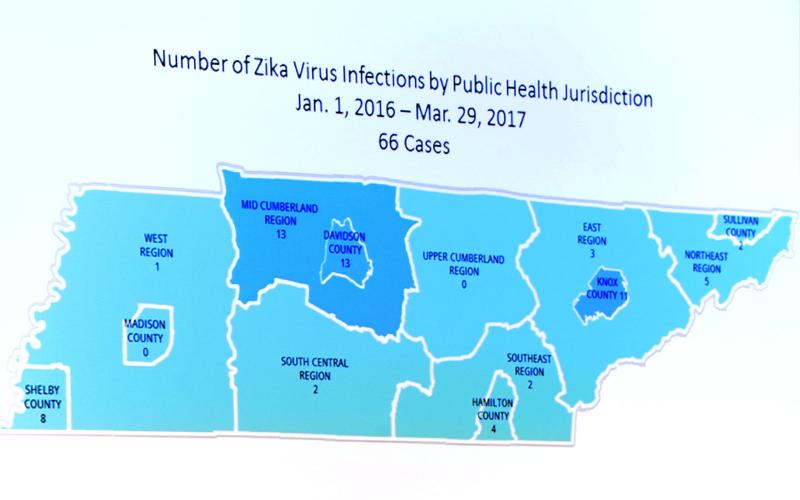
This map shows the number of Zika virus cases in Tennessee this year up to March 29. Sullivan County had 2 cases.
Earl Neikirk/BHC
Dr. Abelardo Moncayo, PhD., director of vector-borne diseases, talks about the process of capturing mosquitos and testing in addition to the program that was used in Miami to fight the Zika Virus.
Earl Neikirk/BHC
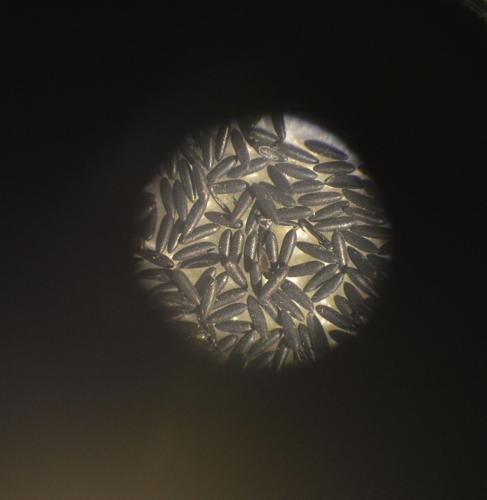
Mosquito Egg samples were available on Wednesday to local county and municipal mayors and county directors of local health departments to see the Zika process. All samples were from Vanderbilt University.
Earl Neikirk/BHC
Dr. Gary Mayes, director for the Sullivan County Regional Health Department, was on hand for the Zika virus update on Wednesday.
Earl Neikirk/BHC
Dr. Abelardo Moncayo, PhD., director of vector-borne diseases, talks about the process of capturing mosquitos and testing in addition to the program that was used in Miami to fight the Zika virus.
JOHNSON CITY, Tenn. — With mosquito season ramping up, Tennessee Department of Health officials said Wednesday they don’t expect the Zika virus to be an issue in Northeast Tennessee this summer.
» Use insect repellent with DEET, picaridin, or IR3535;
» Treat clothing with the insect repellent permethrin;
» Use screens on doors and windows;
» Use air conditioning;
» Empty, turn over, cover or throw out items every week that hold water, including tires, buckets, planters, toys, pools, birdbaths, flowerpots and trash cans. The containers should also be scrubbed to remove mosquito eggs.
Dr. David Kirschke, MD, regional medical director, presented a Zika virus update on Wednesday to local county and municipal mayors and county directors of local health departments.
Dr. Abelardo Moncayo, PhD., director of vector-borne diseases, talks about the process of capturing mosquitos and testing in addition to the program that was used in Miami to fight the Zika Virus.
Mosquito Egg samples were available on Wednesday to local county and municipal mayors and county directors of local health departments to see the Zika process. All samples were from Vanderbilt University.
Dr. Abelardo Moncayo, PhD., director of vector-borne diseases, talks about the process of capturing mosquitos and testing in addition to the program that was used in Miami to fight the Zika virus.